
Computer Engineers: Builders of Tomorrow’s Tech
Known for their broad technical expertise, computer engineers are the architects of the modern technological world. Their ability to design, build, and optimize systems across hardware, software, and embedded platforms establishes them as leaders, driving practical and scalable innovation.
With the guidance of Dr. Firas Hassan, professor of electrical and computer engineering at Ohio Northern University (ONU), this page explores:
● The versatility of computer engineers’ skill sets
● The real-world solutions they’re creating
● How you can become part of the next generation of computer engineers at ONU
What Are Computer Engineers and What Do They Do?
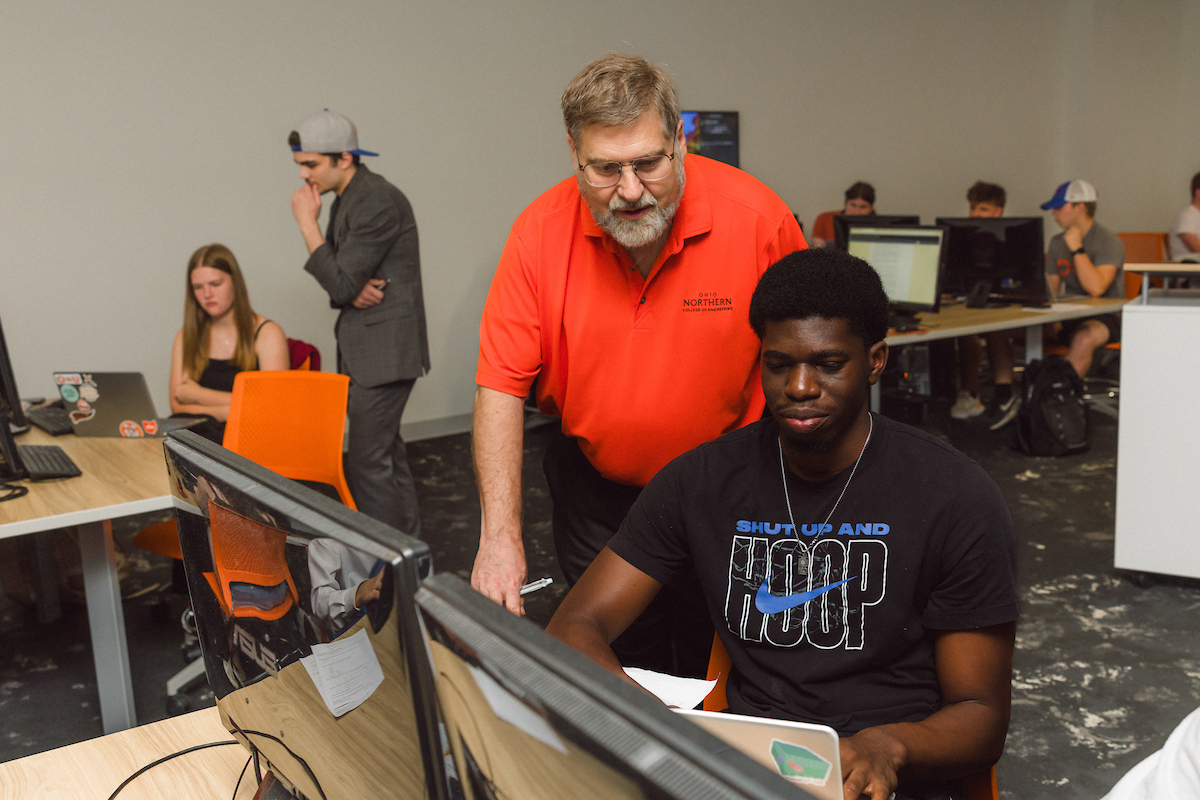
Computer engineering does not lead to a single, narrowly defined role. As Dr. Hassan explains, “They can be the people creating technology, but they can also be the people who know how to use technology in the best way possible.” Computer engineers approach innovation by asking, 'How can it be built better, faster, and more efficiently?'Computer engineers bridge the gap between hardware and software, designing and optimizing the systems that power modern technology. Their work revolves around how complex components operate together as a whole — an essential skill as industries advance in artificial intelligence, sustainability, and other emerging fields.
From the cars we drive to smart devices, robotics, and large-scale computing systems, computer engineers ensure technology works reliably and solves real-world problems by understanding how software, hardware, and data interact — and how decisions at one level affect the entire system.
Why Are Computer Engineers So Critical to the Future of Technology?
While computer engineers can program and assemble hardware, their ability to optimize entire systems makes them indispensable across various industries. Their training empowers them to look past individual components, identify system-wide opportunities, and make strategic decisions that balance performance, efficiency, and cost.
Dr. Hassan uses the growing energy demands of data centers as an example. As AI, cloud computing, and cryptocurrency place increasing strain on power grids and the environment, optimization becomes essential.
He explains, “I would argue that even at that level, you can optimize hardware and software to consume less power, to be faster, or to be cheaper. Those three factors — power, speed, and price — define the problem: taking a task, taking a computation, and optimizing it for one or all three.”
These three non-negotiables — speed, power efficiency, and cost — are at the heart of most modern technological problems. And their ability to understand the whole picture of how systems work as a whole differentiates and qualifies computer engineers to lead the way.
That systems-level mindset matters more than ever. While programming is increasingly accessible, optimization remains a highly specialized field.
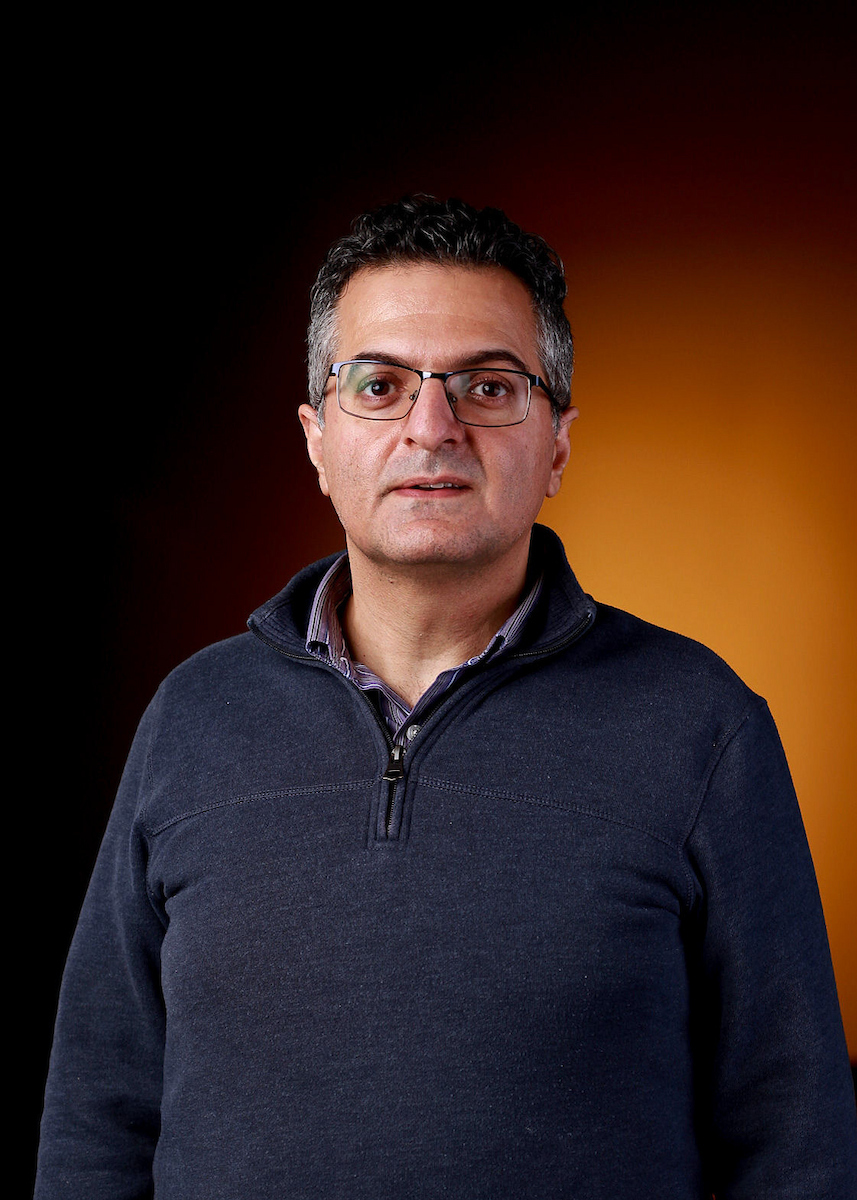
Anybody can program nowadays. ChatGPT can program for you. But the challenge of optimizing your computation from a speed, power, and price perspective will always be there and will always be important.Dr. Firas Hassan, professor of electrical and computer engineering
What Problems Are Computer Engineers Solving?
-
The COVID-19 pandemic not only exposed massive global supply chain disruptions but also highlighted how computer engineers take action to address the vulnerabilities hidden within modern systems, especially in the automotive industry.
Dr. Hassan pointed out that manufacturers were brought to a near standstill by a shortage of a single component — computer chips. “You had this huge car industry that was pausing, just waiting for a chip to come. Who designs chips and knows what goes on them? Computer engineers.”
Our modern vehicles rely on complex embedded systems that control everything from engine performance and safety features to navigation and autonomous driving capabilities. The network of computers that powers these systems is all the handiwork of computer engineers.
Along with creating the technology embedded in cars, they use their expertise to integrate those systems across manufacturing pipelines and global supply chains to maximize efficiency and production quality. Computer engineers ensure that advanced automotive technology is not only innovative but also reliable and scalable.
-
In the era of smart homes, computer engineers seek opportunities to expand the boundaries of wireless communication. Early Internet of Things systems relied on “dummy” sensors that sent all data to the cloud for storage; however, growing bandwidth limitations have shown this to be an inefficient method.
Hassan outlines bottlenecks in wireless communication that are driving a shift toward edge computing, where devices process information more locally rather than in a centralized location.
“For example, the Ring camera has a motion detector, and it only informs you or turns on the camera when there is motion, so you are not continuously getting images. The embedded device makes decisions and has some intelligence. Maybe in the future, that Ring device can detect faces and decide whether it is important to send that information or not.”
By applying systems thinking, computer engineers reduce unnecessary data transmission, conserve bandwidth, and improve system efficiency.
-
They also play a crucial role in advancing modern healthcare, particularly in the fields of biomedical imaging and diagnostics. Many of the non-invasive tools used today to detect diseases earlier, such as CT scans and PET scans, rely on complex computing systems designed by computer engineers.
As Dr. Hassan explains, “All of these imaging devices — whether they are acoustic or use other technologies — are not truly images. You transmit something, receive it back, and represent it as an image. All of that is carried out by computer engineers.”
Through this innovative technology, which expands beyond traditional engineering sectors, computer engineers have enabled doctors to identify disease or injury sooner, make more informed decisions, and enhance patient care.
How ONU Empowers You to Become a Computer Engineer
-
Here, we have intentionally designed our Bachelor of Science in Computer Engineering program to develop in-depth technical skills, critical thinking, and adaptability that match the pace of a rapidly evolving world. Our curriculum takes a scaffolded approach and is organized around core focus areas that expand students’ systems-level expertise:
● Design
● Analog
● Software
● Hardware and networking
At the beginning of their program, students are introduced to digital logic, then progress through computer architecture and real-time embedded applications. They then take a hardware–software co-design course that brings these concepts together and helps round out their expertise. Many of our computer engineering classes have accompanying labs, which enable students to apply what they learn in the classroom and build practical knowledge.
Along the way, students study alongside peers in other engineering majors, creating an interdisciplinary environment that cultivates collaboration and teamwork. -
At ONU, we create an experience that supports students’ growth as engineers, both inside and outside the classroom. Competition teams, such as Polar Robotics, ignite students’ creativity while strengthening collaboration and problem-solving skills.
Guided by Dr. Hassan, one of the faculty advisor for Polar Robotics, students compete in the Collegiate Robotic Football Conference (CRFC). Over the course of the academic year, they design, build, and program autonomous robots, gaining practice with embedded systems, hardware integration, and real-time decision-making in a fun and fast-paced environment.
While they develop essential technical skills, students also learn how to stick to a budget as they build their robots, divide work among their teams, and confidently try out new ideas regardless of the outcome. All of these empower students to be resilient and resourceful. -
To prepare students for a thriving career future, ONU’s College of Engineering trains computer engineering students to use real-world challenges as the foundation for innovative and relevant research.
In a past robotics competition, Dr. Hassan and his students identified a safety issue: when robots collided and the batteries were disconnected, a loss of power could cause the embedded system to lose communication, resulting in the robot losing control.
Instead of treating this as an isolated problem, Hassan turned it into a research opportunity to discover how embedded systems can safely manage multiple tasks and communication channels simultaneously. This work led to undergraduate research that explores real-time operating systems (RTOS), providing students with critical research experience that shapes their academic and professional growth.
Beyond individual projects, students can also present their work at undergraduate research conferences, where they can share findings alongside peers across engineering and computing disciplines. Not only does this build a supportive environment, but students also undergo essential professional development as they improve their communication skills and presentation abilities.
Major in Computer Engineering
Contact us to learn more about ONU’s Computer Engineering program.

Shape Your Future With a BS in Computer Engineering
Ready to be a part of a community invested in your success? The Bachelor of Science in Computer Engineering program at Ohio Northern University provides an education grounded in hands-on learning, faculty mentorship, and extracurricular activities that integrate skill acquisition with creativity and experimentation.Begin a new adventure at ONU.