While textbooks and lectures lay the groundwork, Ohio Northern University students recently discovered that nothing compares to standing where history was made.
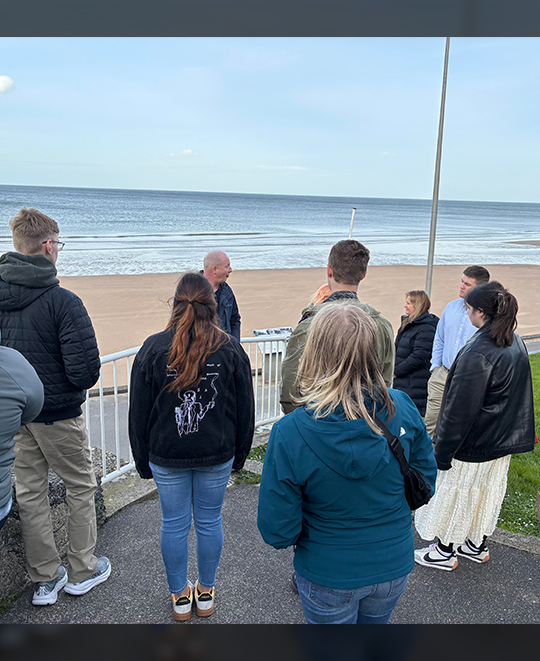
This past spring break, a group of ONU students traded the classroom for the beaches of Normandy, immersing themselves in the physical remnants of World War II.
“They got to walk where history happened, and tried to put themselves in that situation,” said Dr. Russ Crawford, professor of history. Crawford led the students on the trip through Europe, which was part of his course, History 2671: World War Memory.
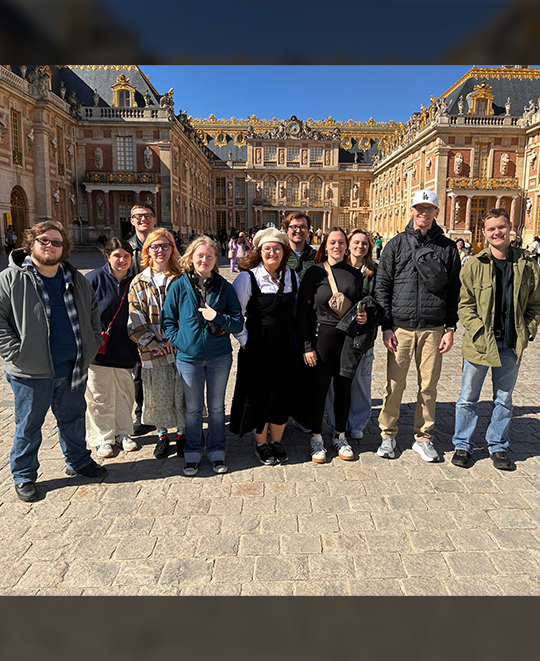
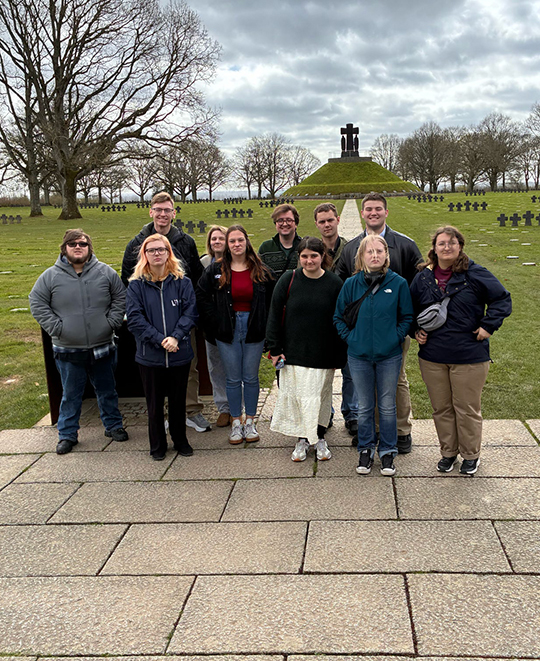
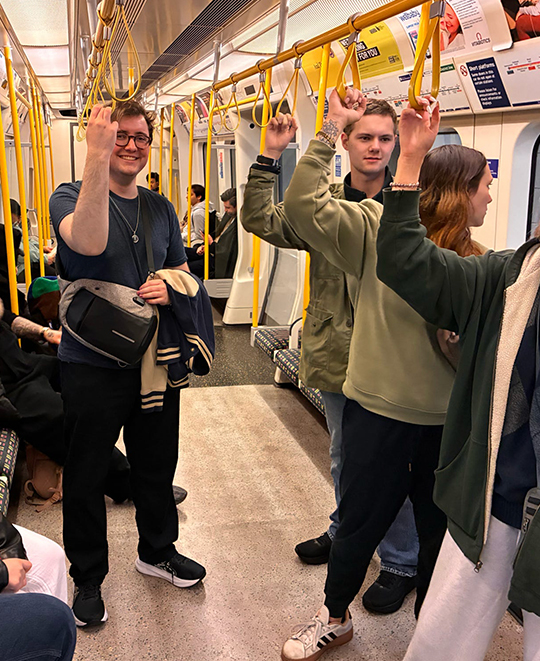
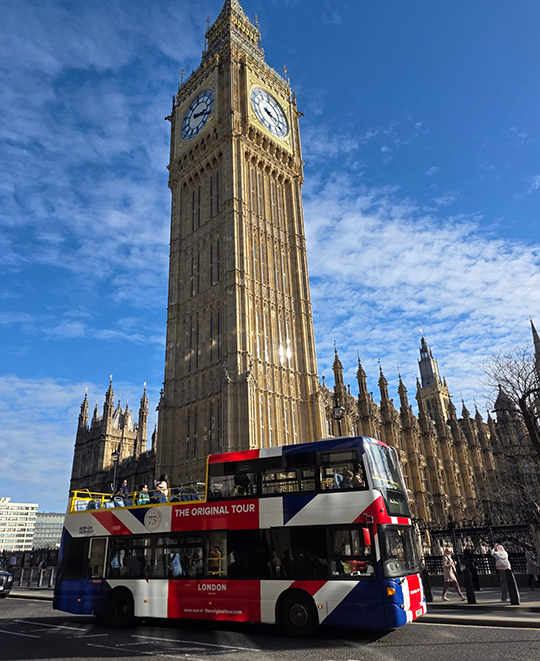
Many of the students were about the same age as the young soldiers who stormed those beaches on D-Day, making that visit one of the many memorable moments on the tour, he added. The students traveled through London, Portsmouth, Caen, Normandy, Rouen, and Paris, exploring the impact of the World Wars, particularly World War II, on those areas.
Building on a similar 2022 excursion, this year’s trip focused on World War II while highlighting how the First World War laid the groundwork for the conflicts that followed, according to Crawford.
While many areas have changed over the 80-some years since World War II ended, physical reminders remained in the areas the students visited.
“Walking down the street you could see bullet holes in the middle of an old brick building,” said Courtney Garrison, a senior history major. Or, she added, you’d see placards in France simply saying so many people died here. “It’s all over and they just kind of built around it.”
“There are still a lot of scars,” said Crawford. “Graveyards are everywhere, so are unexploded ordnance. There are still places you can’t go to because of the danger.”
Since most of the European survivors of World War II have passed away or are quite elderly, the students relied on the oral histories preserved in museums to get a sense of life during the war. “It gave you more of an insight of what they went through during that time,” said Ayla Avila, a sophomore majoring in history and social studies education.
Museum displays also provided insights.
“It was really interesting when we went to Winston Churchill’s cabinet war rooms because everything in there was left untouched,” said Avila. It was all behind glass, and hadn’t been moved since Churchill was there. “It was really impactful because it was the same telephones, the same maps he used, the same chair he sat in when he had arguments with people.” The museum guides pointed out the deep scratches in the arms of Churchill’s chair—physical evidence of the stress and frustration he felt while directing the war effort.
Students and Crawford all had favorite moments.
For Garrison, it was the Imperial War Museum in London.
“I’m a sucker for interactive museums like that,” she said. Students could see what it was like to walk through the World War I trenches. Another display included a full-size, walkthrough Anderson shelter, allowing visitors to experience what families endured during the Blitz. The Anderson shelters, made of corrugated steel, were often buried in gardens to protect families from bomb blasts.
Crawford said he especially enjoyed the Gallery of Great Battles at the Palace of Versailles. While the Hall of Mirrors is more famous, the immense Gallery featured 30 to 40 paintings highlighting French victories through the centuries.
“I thought that was excellent,” Crawford said. “I could have spent weeks there.”
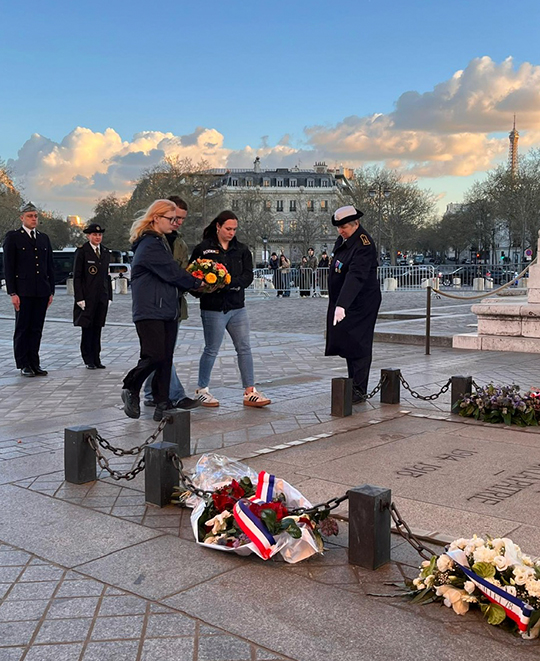
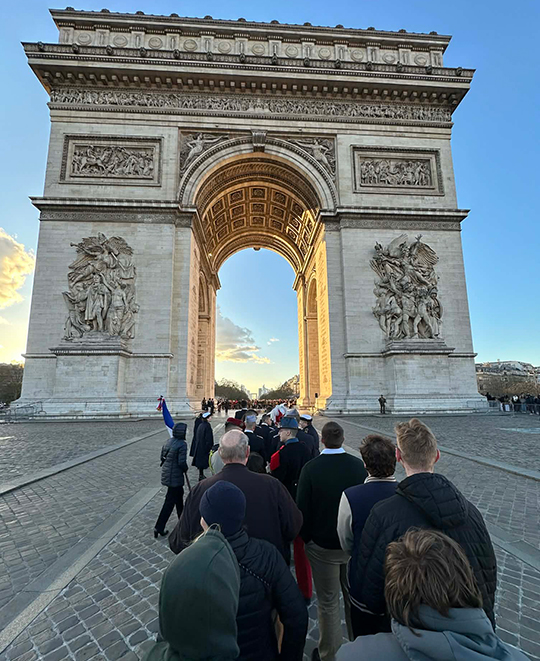
In another memorable moment, Garrison and Avila, along with Russell Moorman, mechanical engineering major, had the opportunity to take part in the rekindling of the Eternal Flame underneath the Arc de Triomphe in Paris.
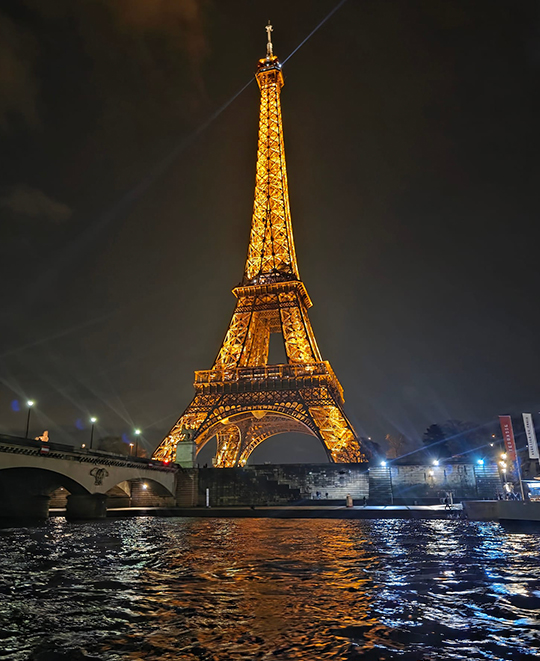
Avila, who had never traveled overseas before, said she particularly remembered an evening at the Eiffel Tower. After descending from the top of the tower, the group gathered on the grass to watch the lights sparkle one last time, calling families back home to share the moment.
Crawford said the students on the trip really embraced the experience of seeing and visiting places they had talked about in class.
“I was impressed at how the students embraced their freedom to experience other cities and locales,” he said. They bravely tried out the French phrases they knew, he added. “They didn’t hide in their rooms; they tried new foods and did a great job of moving outside their comfort zone.”
These types of travel courses are beneficial for students, he added. “It gives them a deeper connection to the course material.”
In addition to Garrison, Avila, and Moorman, other students on the tour were: History majors Maya Domachowski, Eliana Junkins, Mark Fowler, Rob Allison, and recent graduate, AJ Comer. Students from other majors included Mac Dare, Mallory Orrick, and Angel Nagy.