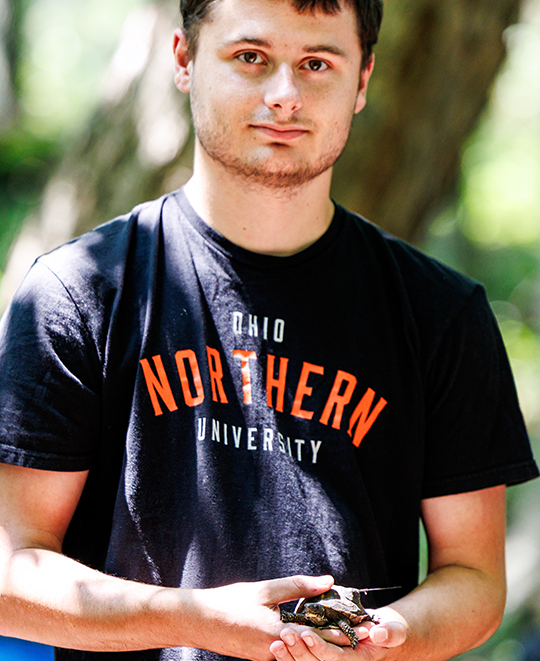
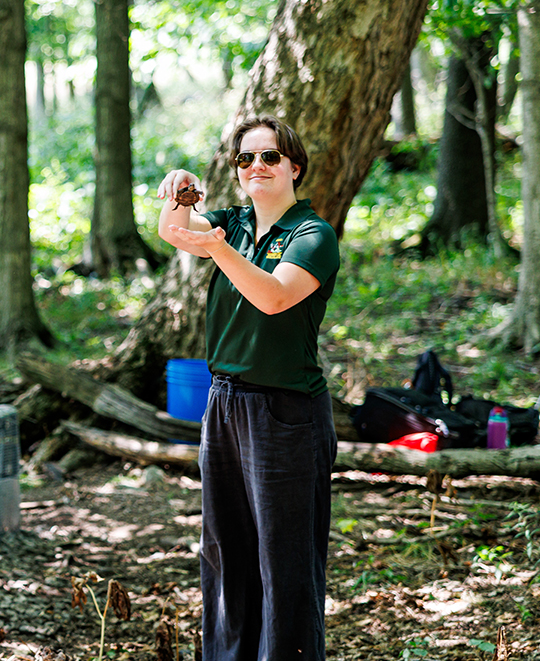
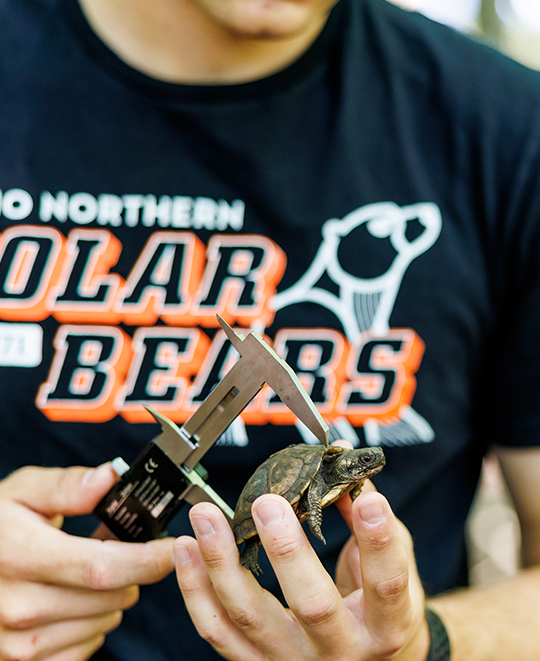
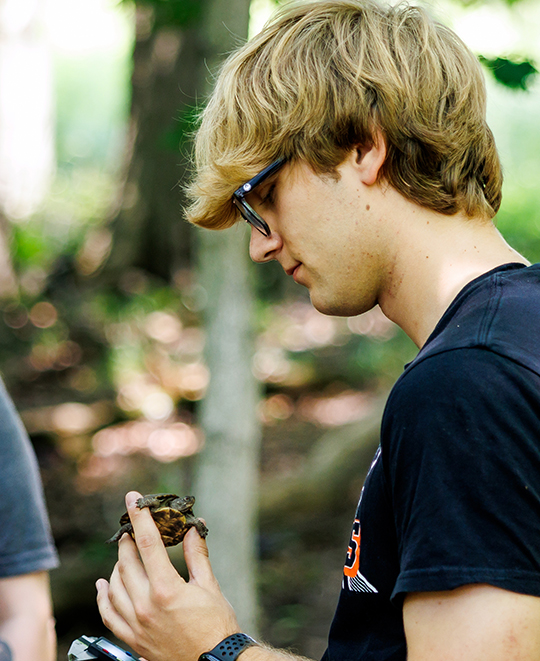
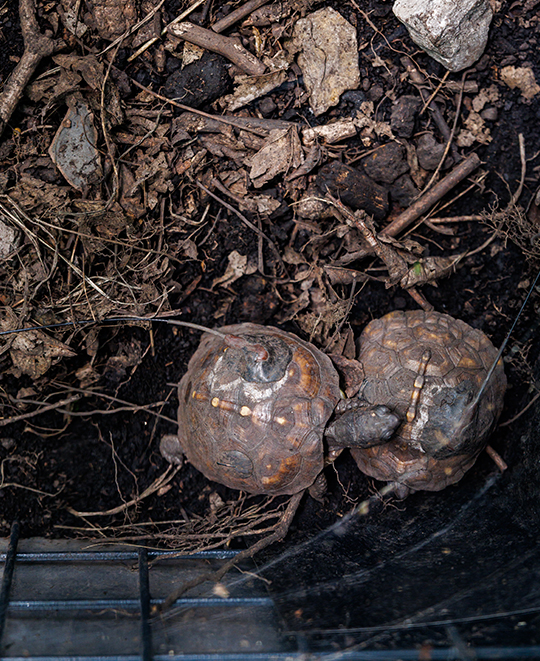
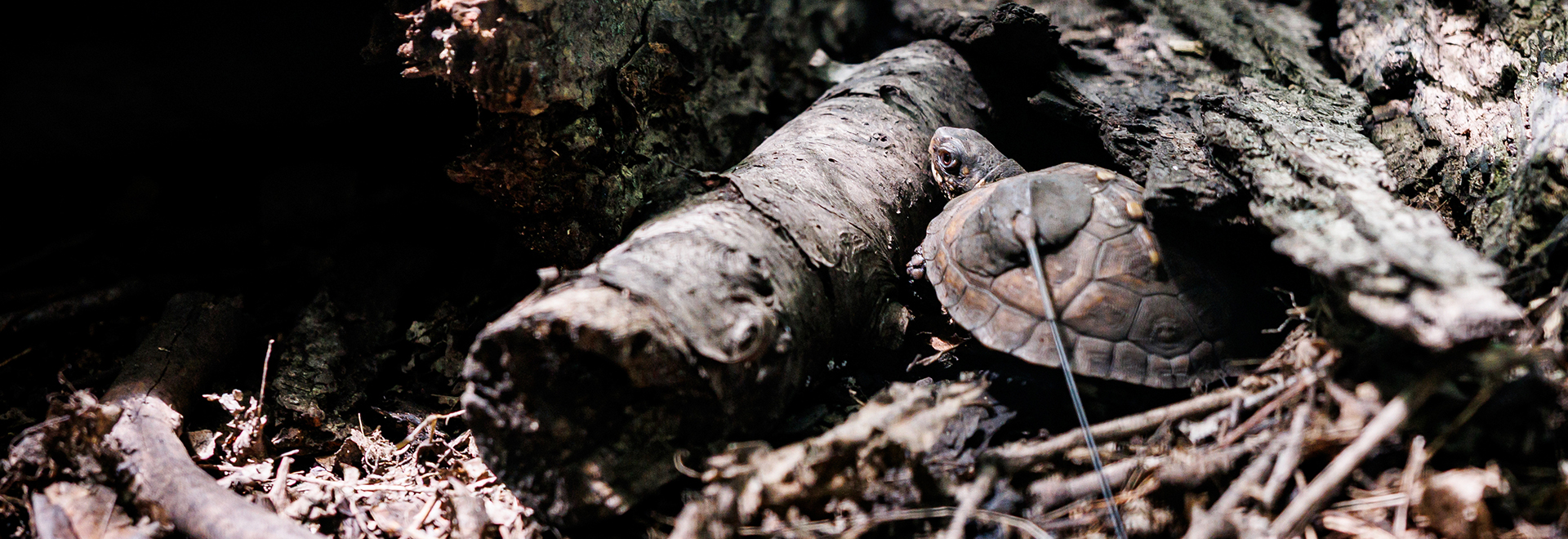
Thirteen juvenile Eastern Box Turtles recently traded the threat of euthanasia for a life foraging for worms and berries in a Northwest Ohio forest, thanks to groundbreaking conservation work at Ohio Northern University.
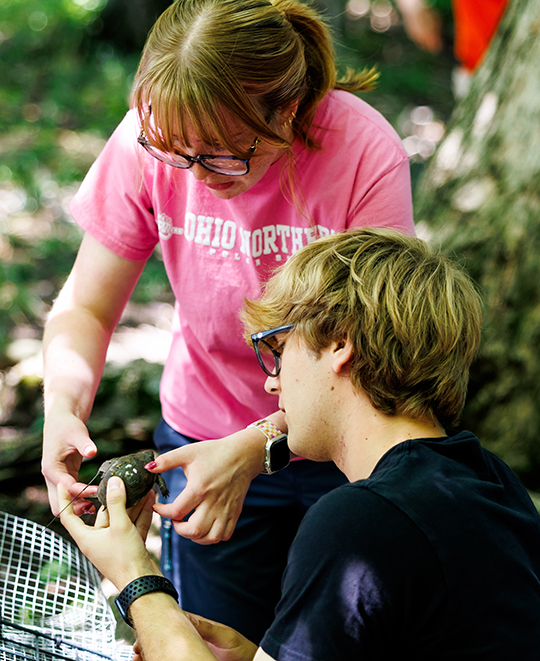
Leading the effort are ONU biology professors Dr. Kat Krynak and Dr. Bob Verb, along with their students, who are participating in a new initiative by the Ohio Division of Wildlife to safely rehabilitate and release captive, rescued, or confiscated turtles back into the wild.
The program, called ROBOTs (Repatriating Ohio’s BOx Turtles), addresses a growing crisis: turtles are rapidly disappearing due to illegal collection for the black-market pet and food trades.
“It takes a long time for a turtle to reach sexual maturity, and there is also a low survivability rate for the young,” explains Krynak. “When you take so many out of the population, that population starts to tank really quickly.”
Every year, the Ohio Division of Wildlife receives hundreds of turtles. Some are surrendered by owners and others confiscated at airports from smugglers attempting to traffic them overseas.
Sadly, with no place to send these turtles, euthanasia was often the only option in the past. Through ROBOTs, however, turtles can be tested and those found to be disease-free and from Ohio’s genetic population can be given a second chance at a partner organization like ONU.
Clare Grooms, a senior environmental & field biology major, says she was shocked to learn the extent of the trafficking problem. “They have species of concern status in Ohio; that’s why rehabilitation and release programs are so important to their survival long-term.”
When the program launched in fall 2025, ONU accepted responsibility for the care and monitoring of 32 hatchlings. By this summer, 13 of the 32 had reached 50 grams, a weight milestone that gives them a greater chance of survival in the wild.
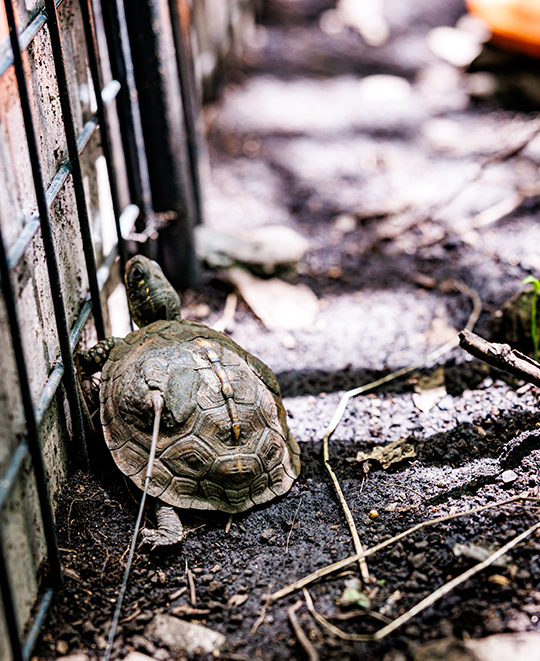
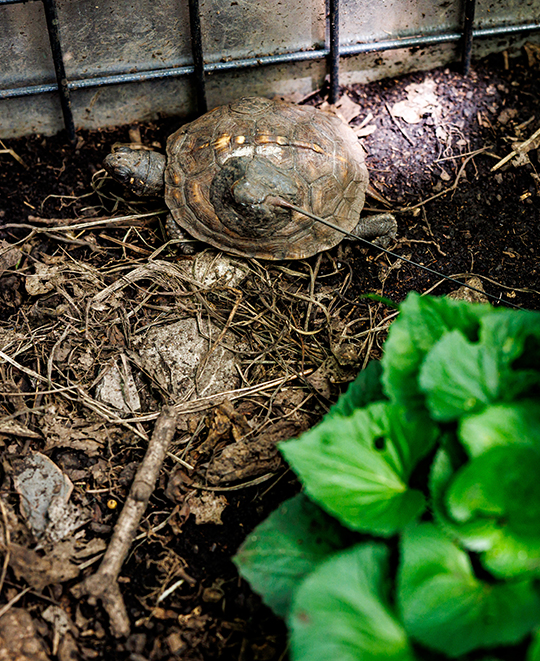
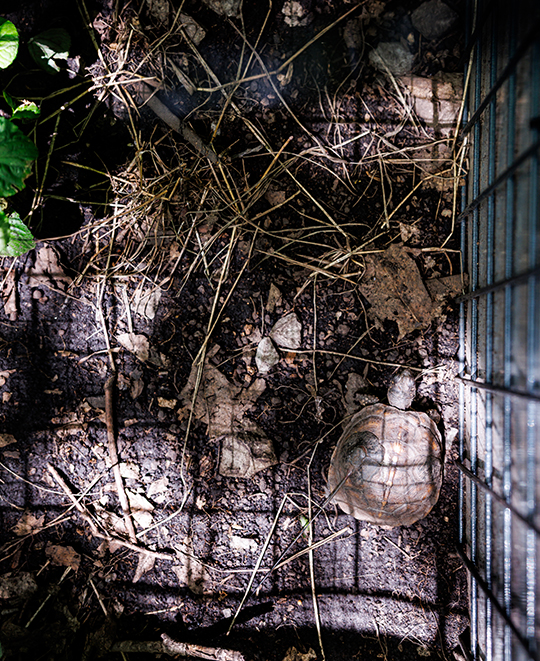
In June, the 13 juvenile turtles were moved from their aquarium to a highly-secured, “soft release” enclosure dubbed the “ONU Turtle Fortress” in an expansive natural area owned by the University.
“This allowed them to be in their natural environment while still being cared for by us,” said Krynak. “They experience changes in weather, predator presence, and learn how to forage naturally.”
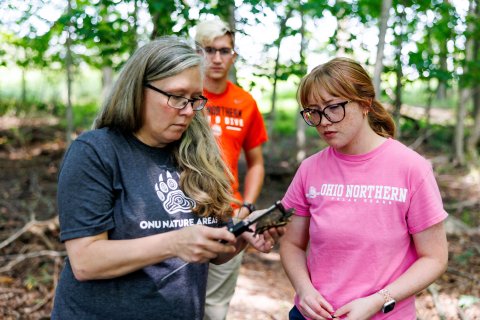
In July, Krynak, Verb, ONU students, and officials from the Ohio Division of Wildlife, released the 13 turtles into a forested area. The turtles have been radio-tagged, allowing students to track them twice a week throughout the fall semester using radio telemetry for an ongoing research project.
“They will be looking at the environment where they are hanging out,” says Verb. “How deep is the leaf litter? How much woody debris? What vegetation is around? What’s the canopy cover?”
The answers to these questions will help future conservationists.
“I’m excited about using the turtle data movement and creating maps using GIS (Geographic Information Systems) to analyze and see what patterns emerge,” says Riley Verb, a senior majoring in environmental & field biology. “Knowing what types of habitats and locations these turtles like can allow for the preservation and creation of these types of habitats.”
After the turtles are big enough, Krynak and her team hope to locate them and attach GPS technology to continue tracking them remotely.
Meanwhile, the 19 remaining hatchlings will continue to be cared for on campus until they attain the desired size for release next spring or summer.
For people unfamiliar with Eastern Box Turtles, “there’s a lot more than meets the eye to these cool critters,” says Anthony Modesto, a sophomore majoring in environmental & field biology.
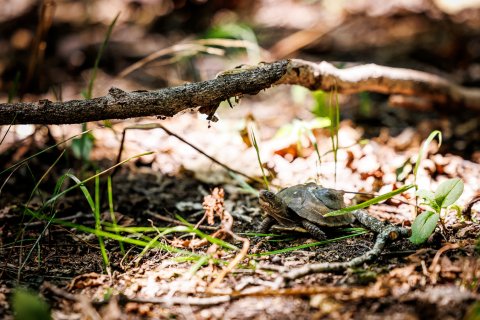
A terrestrial turtle (they live on land), they have a hinged shell that allows them to completely pull in their head and limbs for protection from predators. Furthermore, their shell is actually their backbone and ribcage combined, so they can never take it off.
Senior Garrett Sines, environmental & field biology major, adds, “the shell even has its own nerve endings, which allow the turtle to feel through its shell.”
Eastern Box Turtles are active during the daylight hours and are omnivorous, eating both plants and animals, including berries, mushrooms, insects, slugs, and worms. As adults, they often live 25-30 years, some living longer than 50 years.
Unfortunately, they have a long list of natural predators.
“The survival probability is low for these little guys, but at least it’s a chance they didn’t have before,” says Krynak. “Given the scale of the trafficking problem, if we don’t do something like this, Ohio is going to lose our box turtles, and that’s really sad.”
A former zookeeper, Krynak says conservation projects like this are what “keep her going.” Even more motivating, she says, is knowing that she’s educating the next generation of conservation biologists.
“It’s such a great opportunity for students to work on a real project—these are real lives they are saving,” she says. “They are learning research techniques for wild populations, captive care and husbandry, disease monitoring, and more,” she says.
The challenges are great, but so is the potential impact, she adds.
“This is the epitome of hands-on learning,” she says. “Some things will work well, and some things won’t; and sometimes that’s preventable and sometimes it’s not. Students have to see all of that so we’re always striving to do better. We want them equipped to improve conservation strategies, and that ultimately helps the future.”