
A 5-acre sanctuary for pollinators and purple martins is taking shape around the Nature Pond on Ohio Northern University’s campus. Although still in the beginning stages of its development, the area is already teeming with life, says Dr. Bob Verb, professor of biological sciences and director of the nature center areas.
“We’re introducing a little refuge in our agricultural-rich location where native pollinators can find a consistent source of food and water,” he says.
This spring, Verb and ONU students seeded the prepared plot with nearly 100 different native plant species, ranging from Rattlesnake Master to Big Bluestem. While it will take three years of growth and future controlled burns to fully mature, the prairie will eventually produce a stunning floral display from June through October, explained Verb.
“It will basically be a never-ending buffet for pollinators,” he says. “There will always be something in bloom.”
Verb’s long-term vision includes planting native woody shrubs, modifying the pond’s bank, and stocking the pond with fish to create a robust “habitat for all sorts of wildlife.”
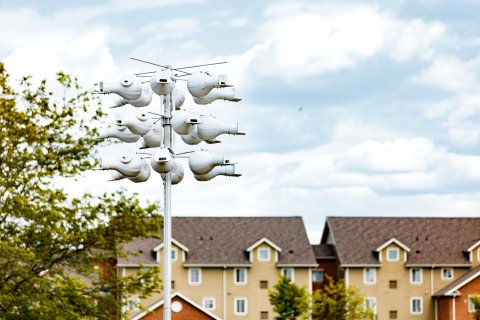
The pond area also provides nesting homes for purple martins— large swallows known for the males’ stunning iridescent plumage, their melodic birdsong, and the aerial acrobatics they use to catch dragonflies and other insects.
Dr. Richard, BA ’69, and Roberta Aros, BA ’68, Polar Bear Sweethearts married for 56 years, are purple martin enthusiasts who provided Verb and ONU students with expert advice on attracting and maintaining colonies.
When they lived in Kentucky, the Aros saw more than 200 fledglings hatch in gourd houses on their homestead every year. Richard explained that these birds fly 4,000 miles to Brazil for the winter then return another 4,000 miles in the spring to raise young.
“During those long flights not all of them survive, so colonies are often decreased through attrition,” he says. “That’s why people across northern Ohio and the U.S. are trying to build up those colonies by providing housing.” (Purple martins east of the Rocky Mountains are almost entirely reliant on human-provided housing.)
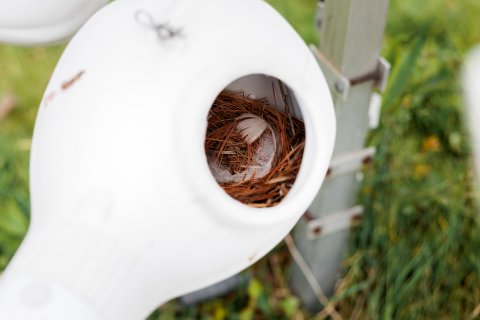
During a visit to ONU last spring, Richard, who enjoyed a 41-year career as a pediatric dentist but remains a biologist at heart, taught students how to line the gourd houses with white pine needles and advised them on monitoring nests to deter invasive species.
According to Verb, ONU’s colony successfully hatched 61 fledglings last spring. That success inspired Verb and his students to erect a second purple martin house by the pond this season.
“The new prairie with native plants will help create a healthier, more beautiful space for everyone to enjoy,” says Verb. “It’s an amazing step that ONU is taking to support local wildlife, protect our environment, and reduce maintenance costs, and it will continue to grow for years to come. I am excited to watch the habitat develop on campus and to see these native species return to a landscape that once appeared throughout Ohio.”