Type of Offering
Major
College
Engineering
Your curiosity about how things work is hardwired. Ohio Northern University's BS in Electrical Engineering (EE) program encourages self-discovery while providing the supportive mentorship you need to develop technical skills that empower your innovative spirit.

Our bachelor’s in Electrical Engineering program inspires you to discover ways to address humanity's greatest challenges—from designing sustainable energy systems that combat climate change to developing communication networks that connect communities worldwide. Through immersive hands-on learning, you think boldly about your career not just as an engineer but also as a change maker to society.
Get ready to drive your career forward at ONU through:
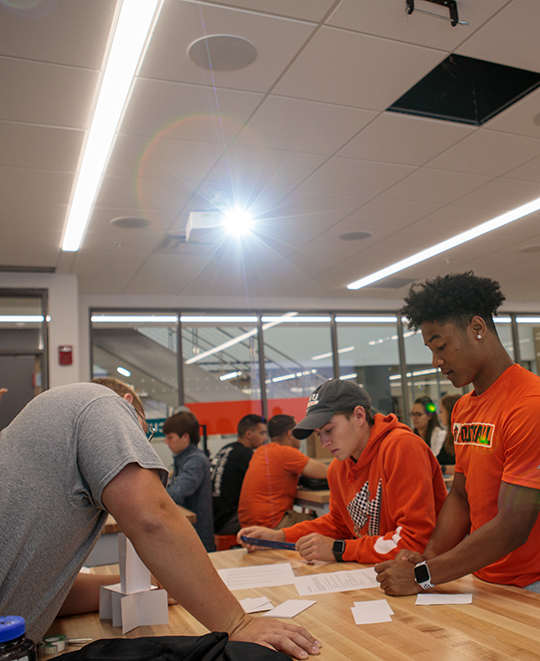
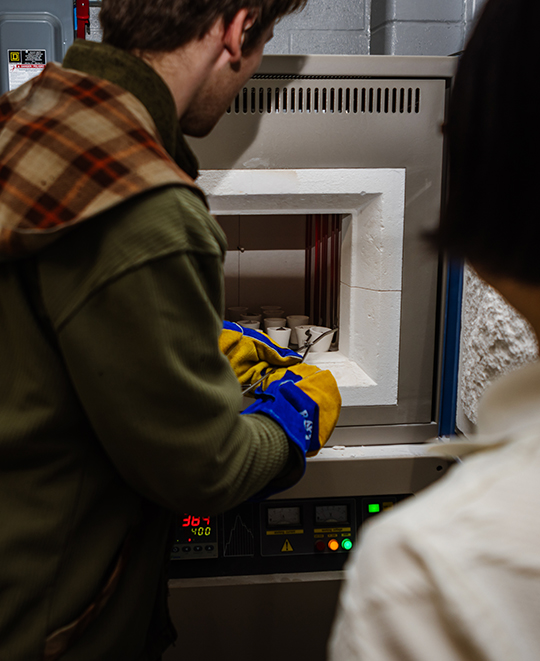
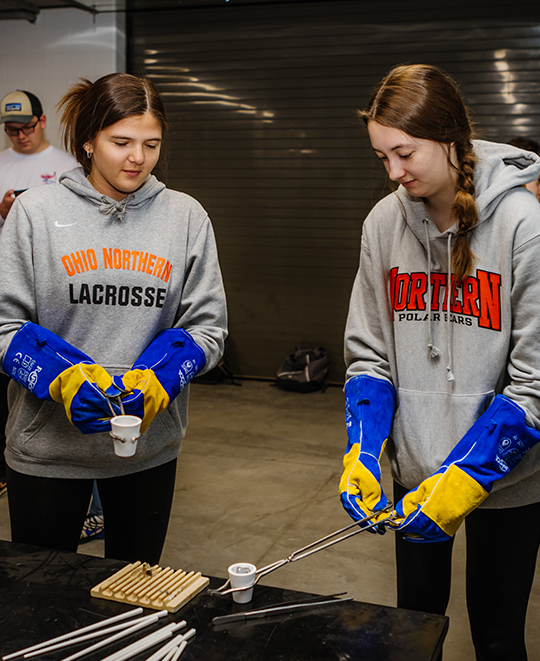
Here, you’re more than just a face in a lecture hall. You’re part of a collaborative community where professors keep their doors open and classmates quickly become lifelong colleagues. Whether you’re transforming ideas into prototypes in our high-tech labs or leading a project in the Innovation Center, you’ll find the resources of a much larger university paired with the individualized support of a tight-knit family.


ABET is a nonprofit, ISO 9001 certified organization that accredits college and university programs in applied and natural science, computing, engineering and engineering technology. The electrical engineering program is accredited by the Engineering Accreditation Commission of ABET under the commission's General Criteria and Program Criteria for electrical engineering.

We crafted our 128-credit-hour electrical engineering curriculum as a pathway of discovery where your curiosity leads the way. Our hands-on approach seamlessly integrates laboratory and experiential projects into the curriculum, encouraging you to explore multiple solutions to complex problems while providing the supportive guidance you need to flourish.
Through experiential learning, technical skill acquisition, teamwork, and creative problem-solving, the electrical engineering program equips you to turn your inquisitive nature into innovative engineering approaches that will distinguish you in your future career.
We encourage you to use your elective hours to pursue a minor or concentration of your choice. Students typically graduate within four years. If you choose to participate in co-op, you complete the Bachelor of Science degree program in five years, including one year of work experience.
During the first year of the EE degree program, you dive headfirst into the core principles of engineering design, entrepreneurship, and high-level programming languages. You also take a science elective, a series of calculus classes, and a writing seminar to enrich your communication skills and sharpen your ability to share your ideas.
Your electrical engineering coursework delivers comprehensive theoretical and practical training. You explore a wide range of topics from the basic laws and analysis techniques of electric circuits to the architecture and design process of control and automation systems. In classrooms and labs, you deepen your understanding of advanced engineering concepts such as:
● power systems
● electronics
● applied electromagnetics
● digital signal processing
● control and automation systems
● communication systems
● embedded systems
● networks and data communications.
Additionally, we integrate both general education and electrical engineering technical electives throughout all four years of the program so you can customize your education.
Your time as an electrical engineering major culminates in a sequence of two design experience capstone courses, where you collaborate with fellow students on a team project to solve real engineering problems. Under the guidance of a professor mentor, you experience engineering first-hand and create in unexpected ways.
Enrich your electrical engineering degree by adding a specialized concentration that deepens your knowledge in a specific area of interest. Whatever it may be, we provide a safe place for you to take on a challenge and test your limits.
Career paths: This path prepares you to work as a power systems engineer, substation engineer, or protection and controls engineer at utility companies, renewable energy firms, or traditional energy sectors.
● Why specialize in AI? This concentration is perfect for you if you want to shape the future of AI-driven technologies. AI is transforming industries, and an EE background gives you the foundation to build intelligent systems that integrate hardware and software.
● What will you learn? Develop smart systems and embedded projects where AI meets hardware. You can participate in labs like Communication Systems to explore advanced technologies.
● Career Path: Enter roles as an AI engineer, embedded AI developer, or in tech companies focused on AI and hardware integration.
Learn from distinguished professors and scholars at Ohio Northern University. Our approachable faculty are there to support you every step of the way as you grow into the person you are destined to be.
Whether our graduates explore new frontiers in the workforce or continue their journey of discovery in graduate school, the T.J. Smull College of Engineering nurtures their growth at every step, providing the compassionate guidance and experiential foundation needed to transform their innovative ideas into meaningful success.
Equipped with a bachelor’s in electrical engineering, our graduates work at NASA, Honda, Amazon, AT&T, and so many other world-renowned organizations. Jump-start your career as a:
● Control systems engineer
● Digital and analog design engineer
● Power engineer
● Project manager
● Robotics and automation engineer
● Telecommunications engineer
● Verification and test engineer
The U.S. Bureau of Labor Statistics (BLS) anticipates a positive trend in the employment of electrical and electronic engineers, projecting a nine percent increase over the next decade. Because of their specialized expertise and in-demand technical skills, electrical engineers earn a stable median salary of $118,780 per year — more than double the national average.












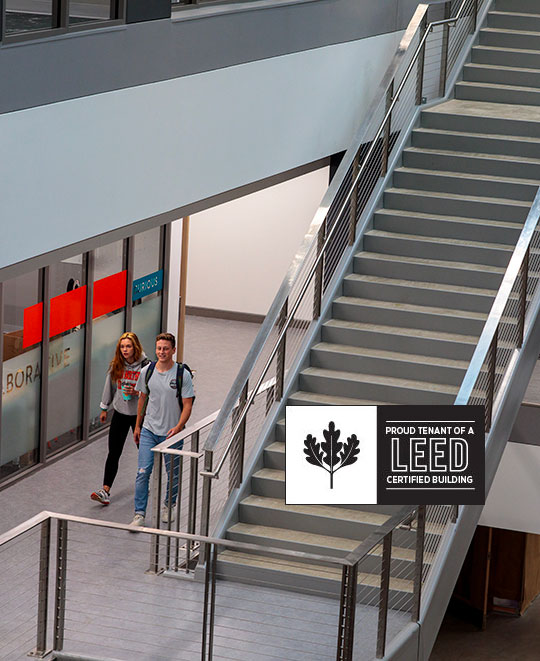
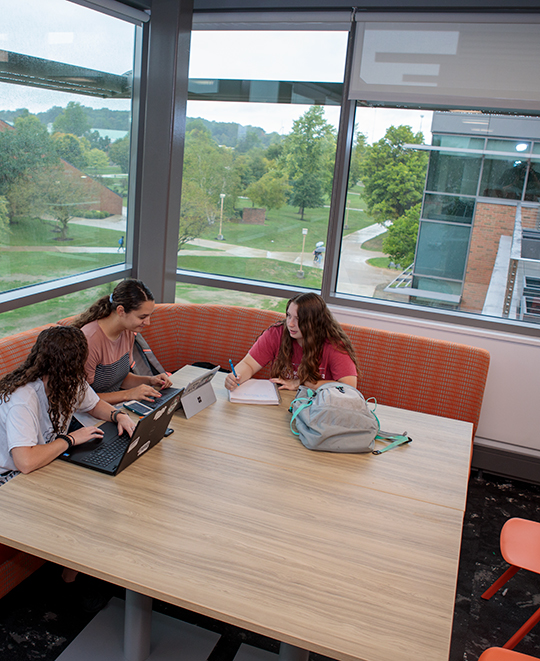
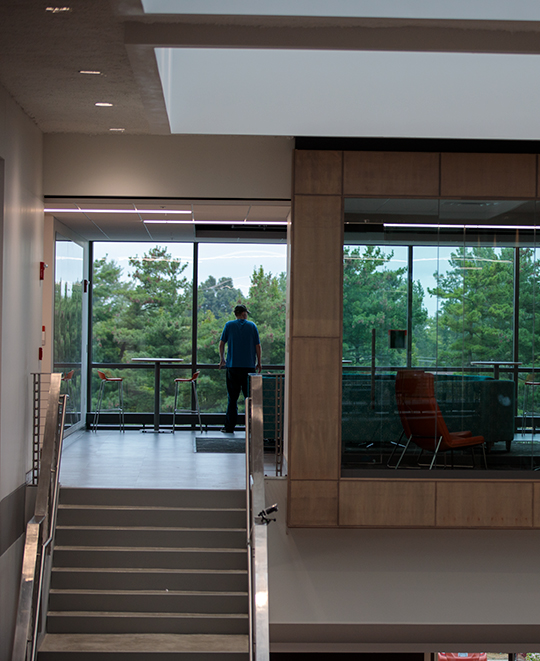
As an electrical engineering major, you learn, experiment, and collaborate in ONU’s James Lehr Kennedy Engineering Building. Constructed in 2019, the James Lehr Kennedy Engineering Building has 105,000 square feet, where our students can use design space for capstone projects, competitive design projects, and other direct industry engagement. Additionally, our engineering building offers 2,000 square feet of research labs and flexible space.

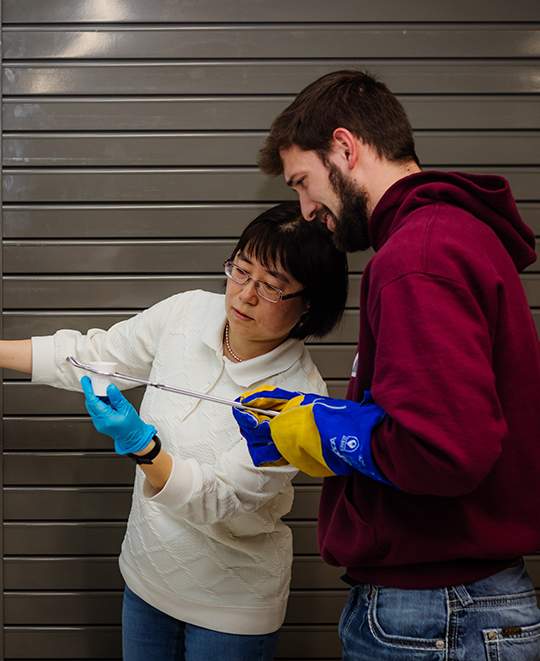


Participate in our active and award-winning student organizations. Whether you’re looking to grow your professional network or focus on refining your technical skills outside the classroom, we have a student group meant just for you.
This group represents the College of Engineering's student body. Members work closely with the dean, faculty members, and student organizations. JEC aims to cultivate greater cooperation and communication between all groups and support a positive on-campus experience.
Join your fellow ONU engineering students and start designing multiple robotic football teams. You build players in all positions — quarterbacks, centers, linemen, running backs, wide receivers, and a kicker — and compete in an annual robotics football matchup against undergraduate engineering students from the University of Notre Dame.
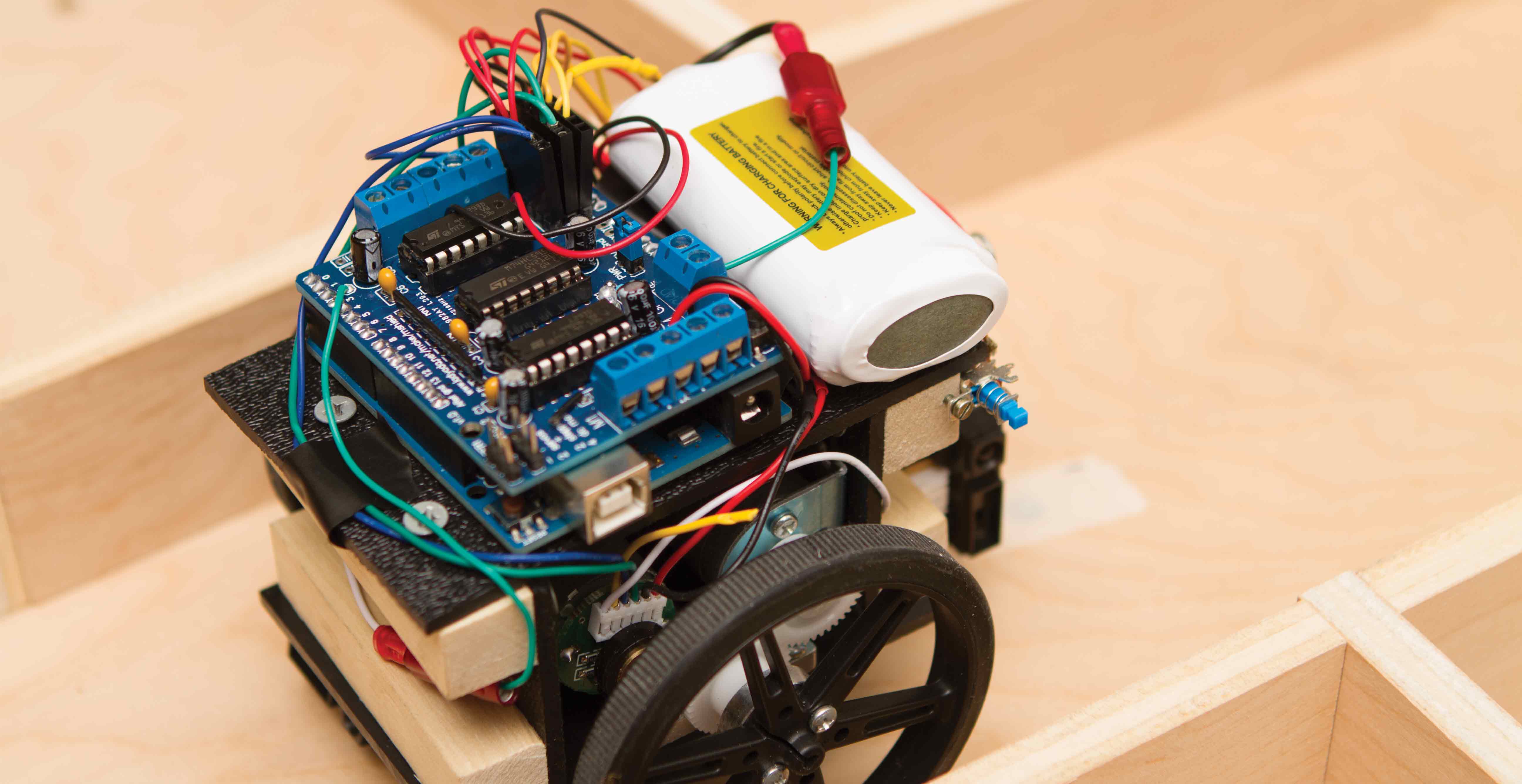
As an international, non-profit professional organization, the Institute of Electrical and Electronics Engineers is devoted to advancing technology and education related to electricity. IEEE hosts the annual Micromouse competition and provides various other professional networking opportunities.
SWE is a professional organization open to all engineers dedicated to raising awareness of the need for more female engineers and encouraging young women to consider majoring in engineering. ONU’s chapter provides support for its female students and hosts social activities.
Join Tau Beta Pi, a national honorary engineering association for juniors who are in the upper 12.5 percent of their class and seniors who are in the upper 20 percent of their class.
Become a member of ONU’s Phi Sigma Rho chapter. Created for women in engineering or engineering technology, this group cultivates a sisterhood that upholds the highest standard of personal integrity, strives for academic excellence, and builds friendships that last a lifetime.


Electrical engineering offers countless opportunities, and there is a great need for creative, smart young people who want to design the future.Courtney Schkurko, BSEE ’13


The admission process is streamlined at ONU, and you can start your journey by:
● Completing your online application
● Submitting official transcripts
ACT and SAT scores are not required.